
Tote ASRS systems deliver fast picks. They also bolt your layout to the floor for the next decade. MobileShelf gives you 300–350+ picks per hour with zero fixed infrastructure — reconfigure as your operation changes, deploy in months, not years.
Picks per hour, per station
Fixed infrastructure required
To relocate an existing deployment
G2P station types, one platform
Tracks every pick, every operator
G2P addresses the single largest cost element in a manual warehouse. Most solutions offer one answer: fix infrastructure to the floor. That answer works until your operation changes — and operations always change.
Source: STIQ G2P Solutions Report, 2025
Miles walked per picker, per shift
In a person-to-goods system, pickers travel to the product. In a 100-person operation, that walking adds up to dozens of full labor equivalents doing nothing but moving — not picking.
Months to install a tote ASRS system
Fixed G2P systems are permanent decisions. Layout changes require construction. New locations require a full installation. When the business pivots, the automation can’t follow.
Payload type most G2P systems handle
Most G2P was built for eaches-only ecommerce. B2B operations need eaches, cases, and pallets at the same station. Separate systems for each order type means separate software, separate problems.
Every each-picking automation decision sits somewhere on this spectrum. Understanding all three — not just the one your vendor is selling — is how you make the right call for your operation.
The robot navigates your existing aisles and meets the picker where the product already lives. The picker grabs the item from the shelf and loads it onto the robot, which carries it to its destination. Works in a brownfield warehouse with no rack changes — drop robots on the floor, SLAM map, start working.
1 worker does what 1.5–2 did before
None — your existing racks stay
Days to weeks — fastest start
Yes — robots go where you go
Brownfield speed — when fast deployment matters more than ROI ceiling
Low leverage means limited ROI. Hard to justify at scale when higher-leverage options exist
The robot brings the shelf to the stationary picker at the workstation. The picker never walks to find product — it comes to them. Freestanding shelves and robots mean every component is moveable. High labor leverage matches tote ASRS without the permanent infrastructure commitment.
1 worker does what 6 did before — confirmed in live deployments
Moveable shelves + robots — zero fixed structure
4–6 months new · 1–2 weeks to relocate
Yes — pick up and redeploy in 1–2 weeks
High leverage + flexibility. Operations that need strong ROI without betting their building on a permanent system
Doesn’t maximize ceiling height. If vertical space utilization is your primary constraint, tote ASRS may win on density
Fixed racking goes to the ceiling with totes stored throughout. Automated retrieval brings totes down and conveys them to stationary workstations. Maximum floor space efficiency — vertical storage density is unmatched. The trade-off is that every inch of that efficiency is bolted to the building.
Similar to G2P — high leverage
Fixed to ceiling — building commitment
12–18 months — longest lead time
No — permanent decision
Maximum floor space efficiency — high ceilings, fixed long-term operation, eaches-only order profile
Rigid, expensive, permanent. When your operation changes, the system can’t follow
PES software receives the pick order from your WMS or ERP. It identifies which shelf holds the required SKUs, calculates the optimal pick sequence, and dispatches the nearest available MobileShelf robot — all in seconds, without a human decision.
The robot navigates autonomously using SLAM — no fixed tracks, no floor modifications. It slides under the freestanding shelf, lifts it, and transports it to the pick station. Multiple robots work simultaneously, keeping a queue of shelves ready for the picker.
The picker stays at the station. An overhead projector highlights the exact bin. Pick-to-light confirms placement. PES logs every pick, every operator, every timestamp — giving you the per-operator data to manage throughput rather than just measure it. Robot returns the shelf; the next one arrives.
Tote ASRS systems offer impressive throughput. They’re also permanent decisions bolted to your floor on day one. MobileShelf gives you comparable pick rates — with a system that moves when your operation does.
Manufacture, commission, interface, go live
Pick up an existing deployment, redeploy to new site
Honest caveat: for mature, high-density each-picking operations where maximum vertical storage density is the priority and the layout is fixed long-term, a tote ASRS can be the right answer. MobileShelf wins on flexibility, speed to revenue, mixed order profiles, and operations that are still evolving.
These are live throughput numbers from Prime G2P deployments — real SKU mixes, real workers, real shifts.
Case picking at the Advanced Pallet Station across live deployments. Range reflects worker speed and order profile variation across shifts. PES data makes the variation visible and manageable.
Each picking throughput at a live piece pick deployment. Real SKU mix, real workers. One operator doing what 6–8 did before automation — confirmed by the CEO of that operation.
Achievable with the right order profile and experienced operators. PES shows you exactly which operators, which shifts, and which order profiles reach peak throughput — and which don’t.
With Prime’s robots and pick stations we were able to do with 1 employee what it would take 6–8 to do before we automated.
Packaging Distributor
G2P isn’t just each picking at a shelf station. Prime’s platform covers every pick profile — from individual items to full pallets — all orchestrated by PES from one system, one robot fleet, one software platform.
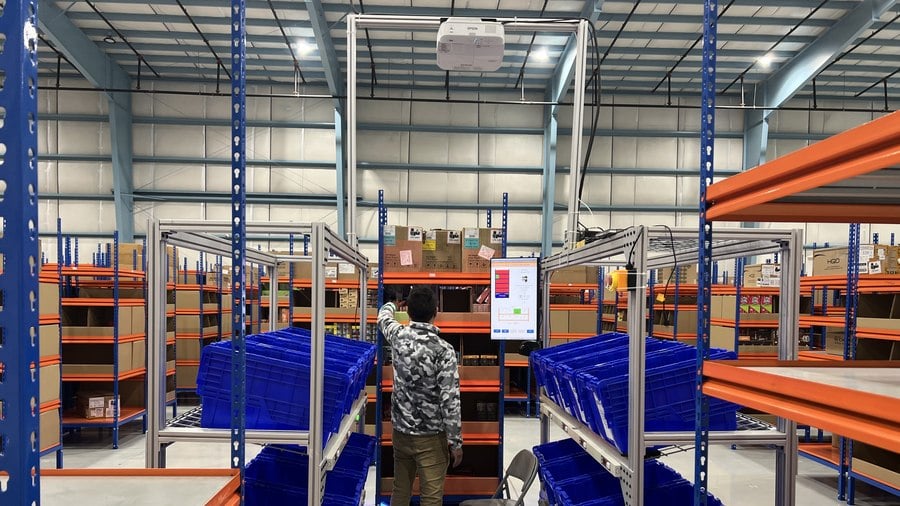
MobileShelf robots deliver freestanding shelf units to the picker. An overhead projector highlights the exact bin. Pick-to-light confirms placement. PES tracks every pick and every operator — so you know exactly who’s fast, who’s slow, and why.
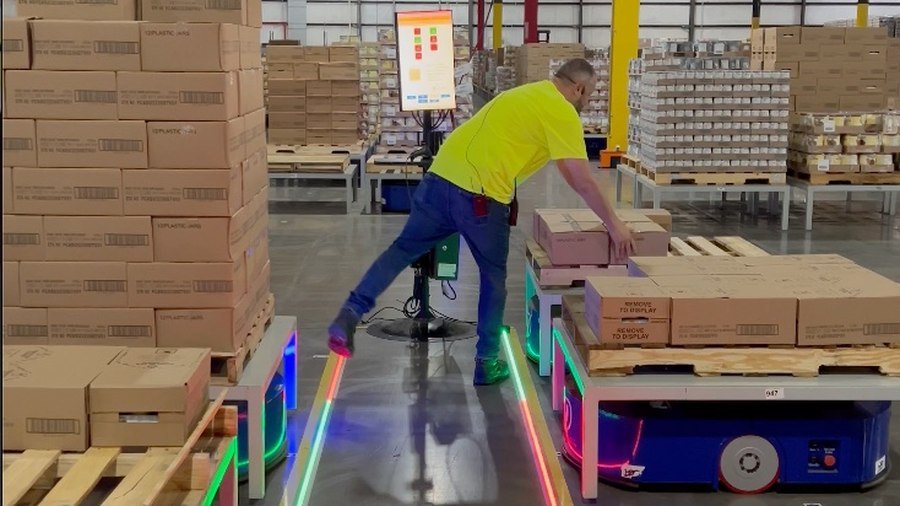
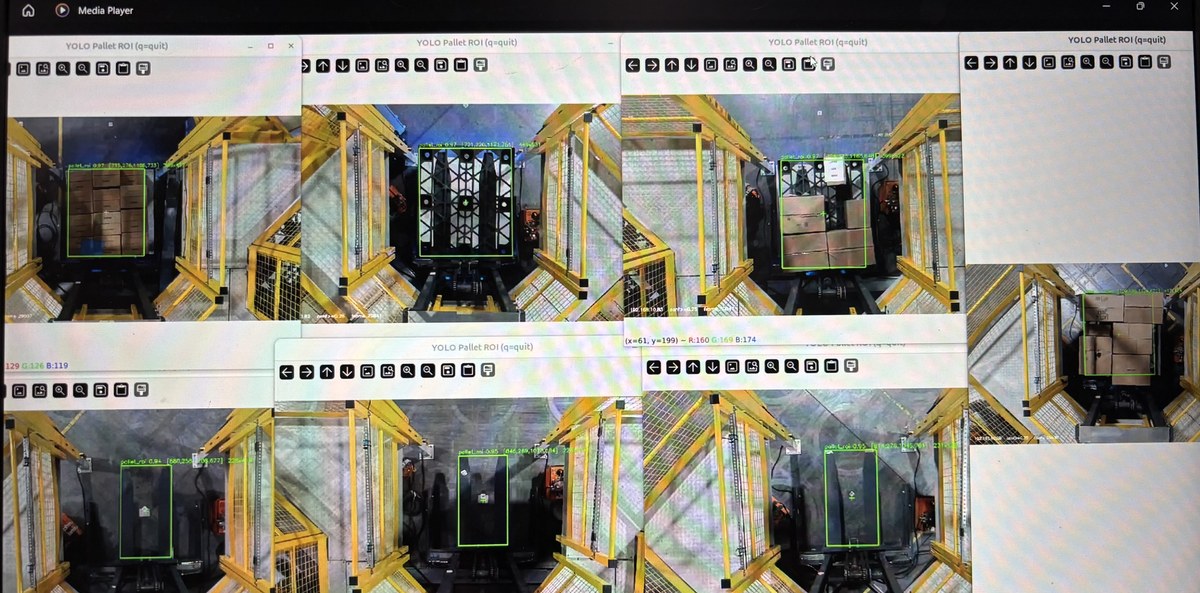
MobilePallet robots bring full pallets to the picker for case-level picking. A live vision system automatically raises and lowers the pallet to maintain ergonomic picking height. Pallet spin functionality in development to eliminate stair-stepping.
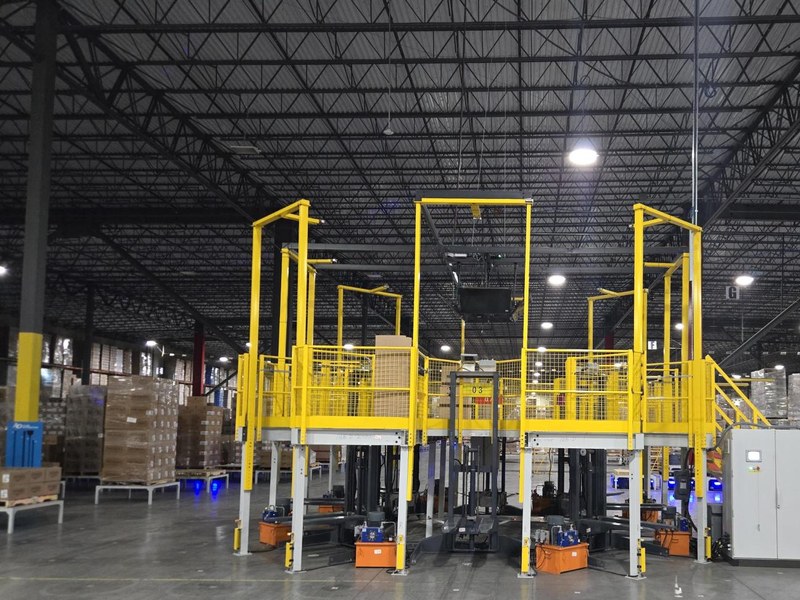
25+ unique SKUs, sub-3 qty per line, pallets to 108 inches. Vision system live — automatically adjusts pallet height and counts cases on the pallet face in real time. The workflow most automation vendors won’t quote.
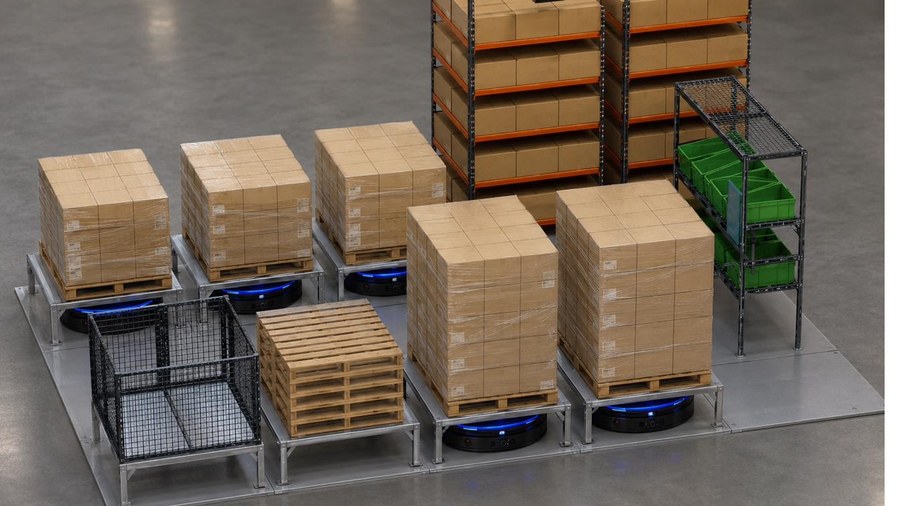
Pick from MobileShelf or MobilePallet to totes or pallets at the same station. Eaches, cases, and full pallets handled in one workflow — without a separate system for each order type. The station that makes mixed-order chaos solvable.
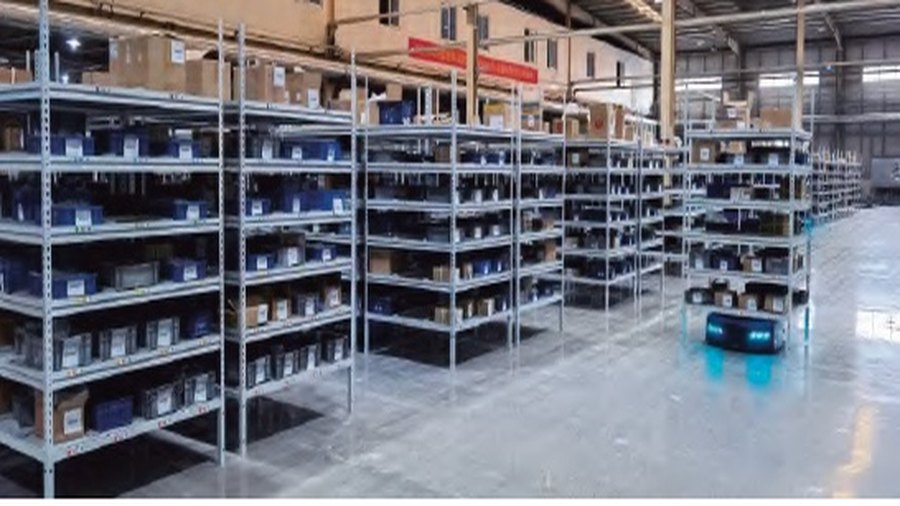
Oversized shelving units built on pallet platforms — moved by MobilePallet robots. Pick cases and larger items that don’t fit standard shelf bins. PPS version available. The same G2P principle applied to a wider range of SKU sizes.
All orchestrated by PES. All on the same robot fleet. All configurable without touching hardware.
Speed varies by order profile, worker experience, and product mix — PES tracks every variable so you can see exactly where throughput is gained or lost, and make the right call to fix it.
The tall pallet problem has two dimensions: throughput and safety. When pickers climb ladders to reach 108-inch pallets, throughput drops and every climb is a liability. Most automation vendors won’t quote this workflow.
Prime’s TPS brings the pallet to the picker. Vision system adjusts height automatically — the picker never reaches, never climbs.
Cases/hr
Max height
Ladders
Most G2P systems handle eaches. MobileShelf handles eaches, inner packs, and full cases — from the same shelf, in the same workflow, without a separate system for each order size.
PES tracks inventory at both the case level and the each level on every shelf. When eaches drop below minimum, PES automatically routes that shelf to a breakdown station — a picker breaks a case into eaches, restocks the bins, and the shelf returns to storage. The pick floor never runs dry at the each level.
Each order line specifies the UOM — each, inner pack, or full case. PES routes the right shelf, the picker pulls the right unit. No manual UOM conversion, no separate pick locations.
PES holds configurable min/max thresholds at both the case and each level. Below minimum triggers an automatic breakdown replenishment — the system manages the cycle, not a supervisor walking the floor.
When an order calls for a full case, PES sends the shelf forward and the picker pulls the case directly — skipping the each-level bins entirely. Throughput optimized for the order, not locked into a single pick method.
Every vendor at Modex claimed AI. Most meant a dashboard with a trend line. In PES, AI is the decision engine — dispatching robots, sequencing orders, optimizing shelf locations, and load-balancing every workflow in real time. Not bolted on. Built in.
Most systems optimize on historical data — what happened last shift. PES looks forward. It reads the order queue, anticipates demand, and pre-positions shelves and robots before picks are requested.
Robot motion paths, shelf slotting, and pick sequencing are continuously reoptimized — not just at startup, but through every shift as the operation evolves.
Others react to orders. PES anticipates them.
Competitors cover one step: outbound picking. The rest — tote collection, buffer management, pack station replenishment, empty tote return — they leave to you. Conveyors, carts, or people filling in the gaps between systems.
PES orchestrates the complete loop with the same robot fleet. AI continuously load-balances robots across every role so no robot idles while another saturates.
Competitors hand you this gap — Prime closes it
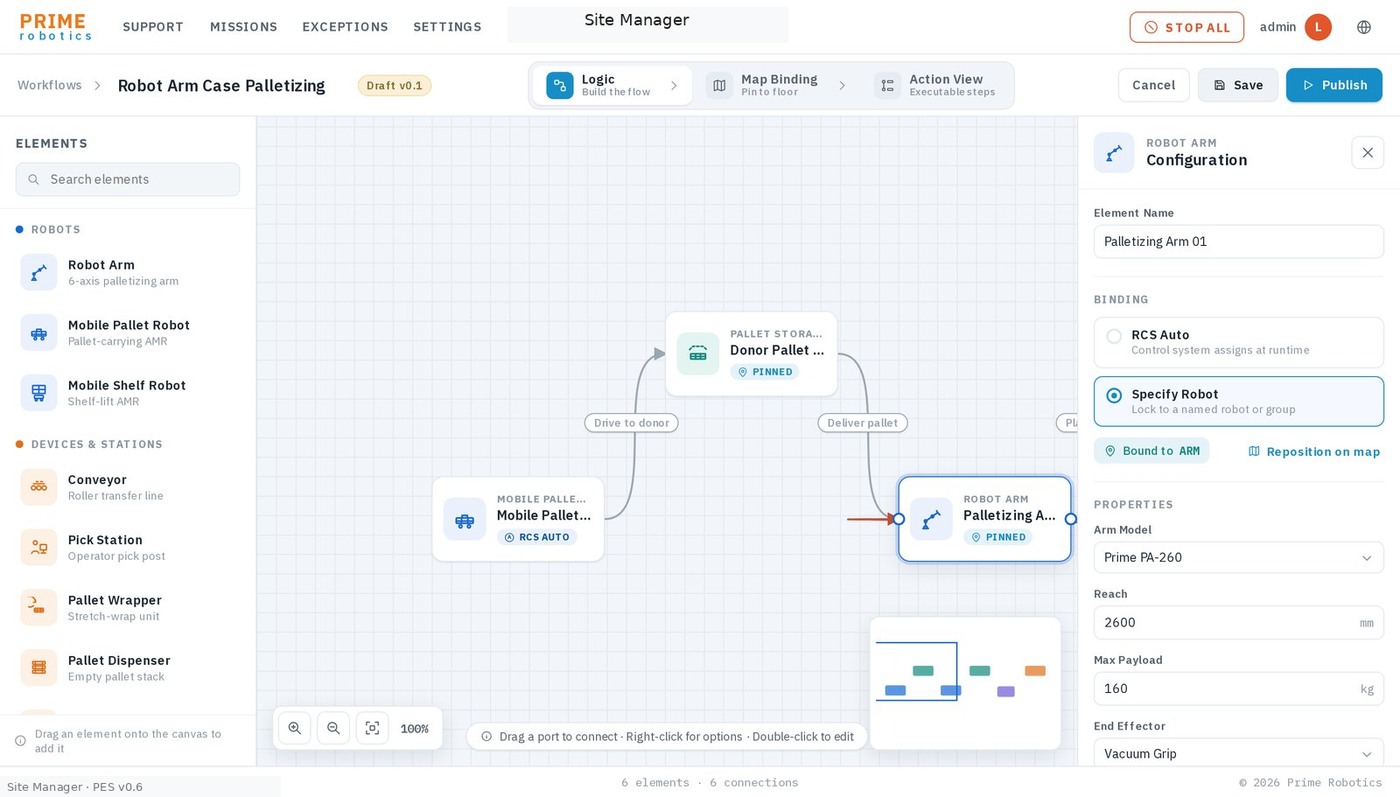
The same AI that runs the system talks to the picker. Operators interact with PES in plain language — asking questions, flagging exceptions, getting guidance — without navigating menu screens or learning command syntax.
Combined with voice confirmation, the result is a system that’s easy to learn and fast to run. Usually those are opposites. Here they’re the same design.
“Flag this shelf location as low stock”
“Show me today’s throughput vs. yesterday”
Expanding to all new deployments in 2026
Pick station technology should reduce cognitive load, not add to it. Every input modality Prime offers — projectors, lights, voice, vision — exists to keep eyes on the product and hands moving.
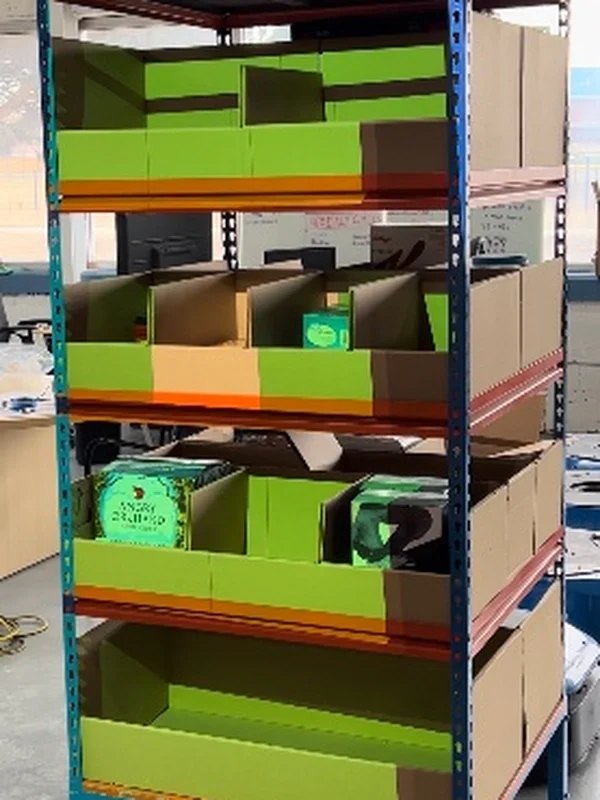
At Piece Pick Stations, a projector mounted above the station casts a white box directly onto the bin the picker should pick from. No screen to look at. No number to remember. Eyes stay on the product, not a display.
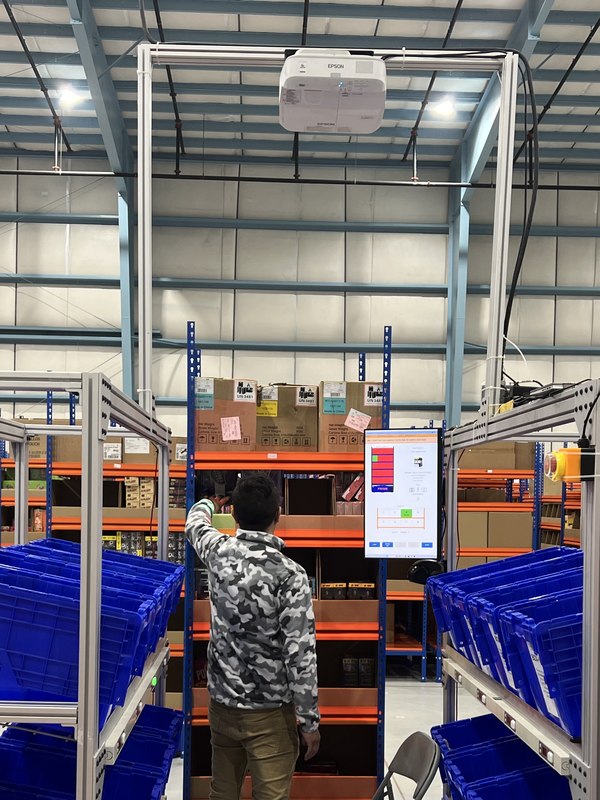
Light-directed picking highlights exactly which bin to pull from. Error rates drop. Training time drops. New operators reach full productivity faster than on any screen-based system — no memorization required.
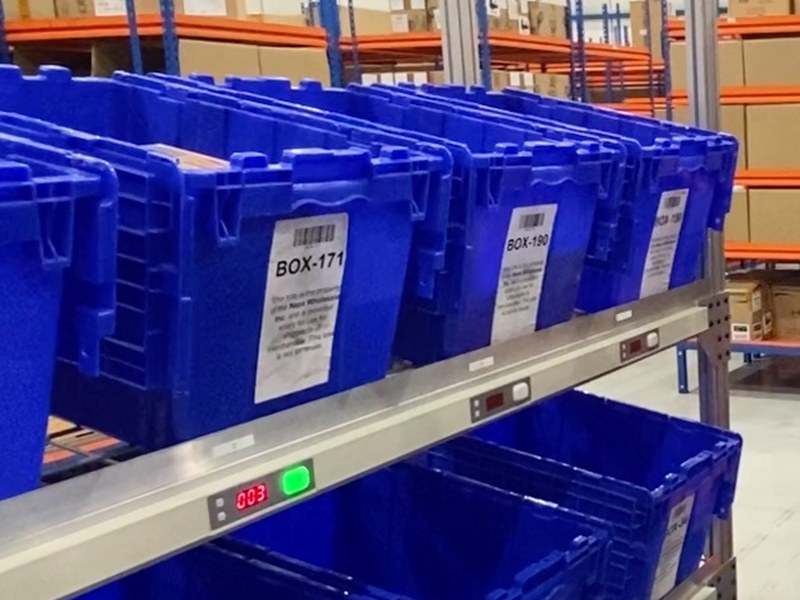
The bump bar tells the picker exactly which tote to place the item in and how many to put there — green light active, quantity on the display. Bump the bar to confirm, system advances. Eliminates mis-sort errors in multi-order batch picking without any screen interaction.
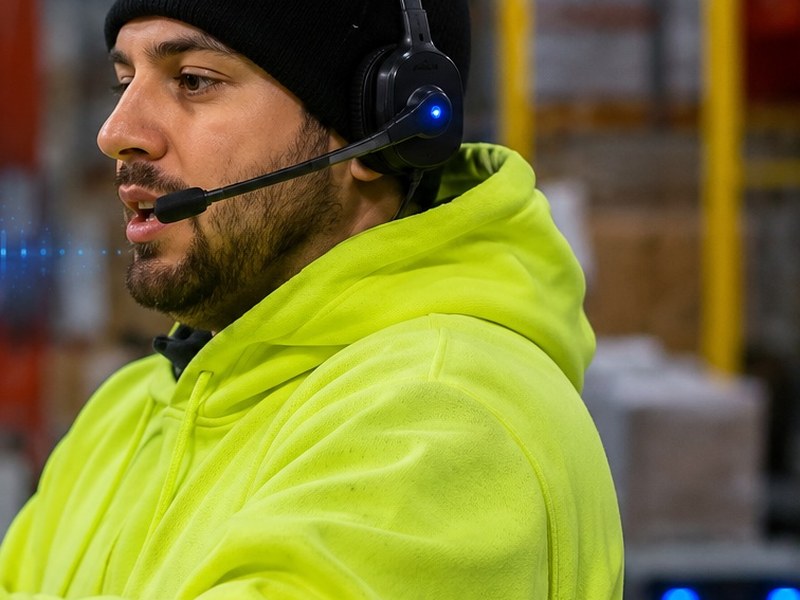
Hands-free voice confirmation keeps hands on product — no touchscreen needed in gloved or cold environments. The same AI that runs the system also understands plain language: operators ask questions, flag exceptions, and get guidance without navigating a single menu. Easy to learn. Fast to run. The same design.
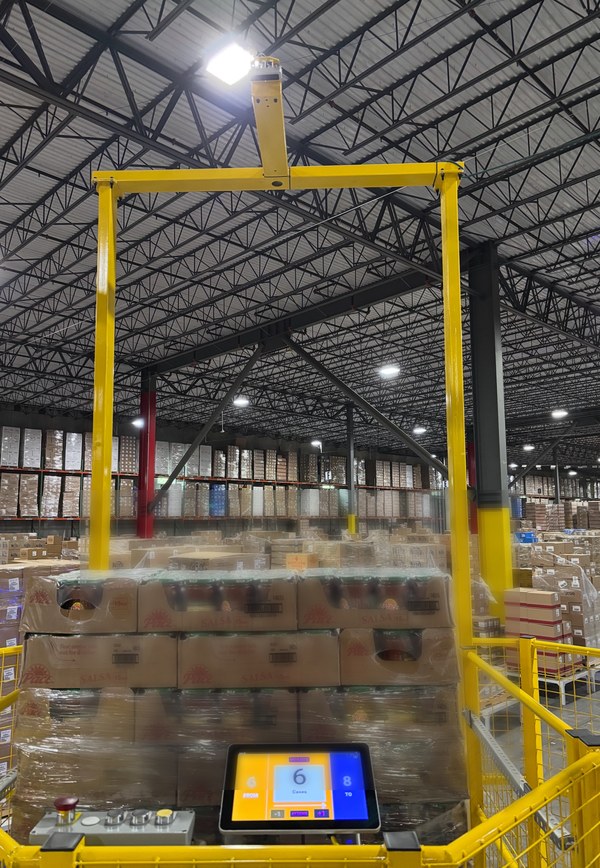
Live at TPS and APS stations. The vision system automatically raises and lowers the pallet to maintain ergonomic picking height as cases are removed — eliminating the need to reach or bend. Also counts remaining cases on the pallet face in real time.
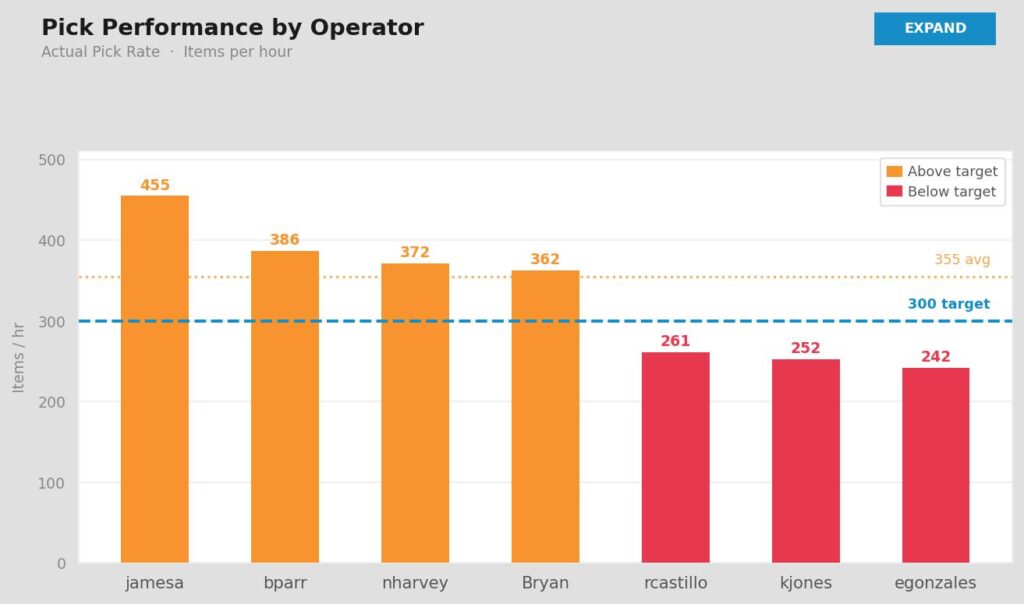
PES tracks every pick, every operator, every shift. You can see who picks at 350/hr and who picks at 280/hr — and drill into why. Order profiles, product mix, time of shift. The data to manage throughput, not just measure it.
Rigid screens with fixed menus are a relic of the software era before LLMs. Prime is building toward a fundamentally different station experience — one where operators interact with PES in natural language, ask questions, flag exceptions, and receive guidance without navigating menu trees designed by engineers. Live today at a national F&B 3PL. The transformation of the UI is the work of the coming year.
PES captures throughput data at every level of the operation — individual operator, pick station, and full facility — in real time. You always know exactly where you are, where the gaps are, and which lever to pull.
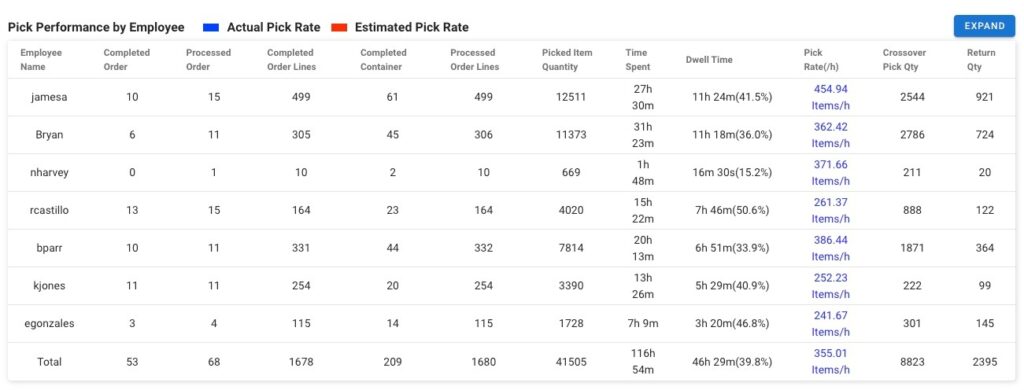

The highest single-operator throughput recorded in a live deployment. PES identifies which operators, shifts, and order profiles reach peak — and which don’t.
Consistent station-level throughput across both APS stations in this deployment. Station-level data surfaces underperformance that operator-level data alone would miss.
Dwell time — the percentage of time the operator is waiting for the next shelf — tells you whether your bottleneck is robots, order profile, or operator pace.
20 minutes. We’ll map your order profile to the right station type, show you realistic throughput numbers for your SKU mix, and tell you honestly whether MobileShelf or a different solution fits better.