
The complexity of a warehouse system lives in its stations. Prime’s depth of purpose-built station types is what lets us configure a system around your footprint, your order profiles, your inventory, and your labor targets — in ways competitors with fewer station options simply can’t match.
Station Types
Categories
Live Deployments
Orchestration Platform
Most systems route everything through the same pick face and call it flexible. The problem is that a single station design optimized for nothing in particular is a throughput ceiling you’ve built into your operation from day one.
Purpose-built stations — each designed around a specific order profile, SKU velocity, or physical constraint — are where labor efficiency and throughput actually come from. The sophistication is in the station, not just the software routing work to it.
When you configure a Prime system, you’re selecting the station mix that fits your operation — balancing footprint, order profiles, inventory depth, labor availability, and throughput targets. That combination is difficult for competitors with fewer station options to replicate.
PES-directed each-pick station — associate fulfills piece-level orders via LED guidance and screen prompts. No paper, no decisions.
Handles both piece-pick and case-pick tasks in a single station; PES routes the right work mix in real time based on wave demand.
Mixed-SKU pallet building with Bullseye Scheduling — 400–600 CPH outbound throughput, arm idle time eliminated.
Robotic palletizer for 25+ SKU, sub-3 qty-per-line orders stacked to 108 inches — the order profile most systems walk away from.
Robot delivers a full shelf to the station; associate selects pallet-quantity picks without leaving the pick position.
Robotic arm handles case-level picks in the outbound flow — consistent pick rates regardless of shift or volume.
Full-layer robotic pick for high-velocity SKUs — depalletizes or builds a layer at a time under PES direction.
Fixed pick line for the top high-velocity SKUs on stationary pallet frames — a robot follows the picker down the lane carrying the build pallet as they place cases directly onto it. Completed pallet routes to APS for remaining SKUs, keeping the fastest-moving items out of the main pick queue and eliminating unnecessary robot round-trips.
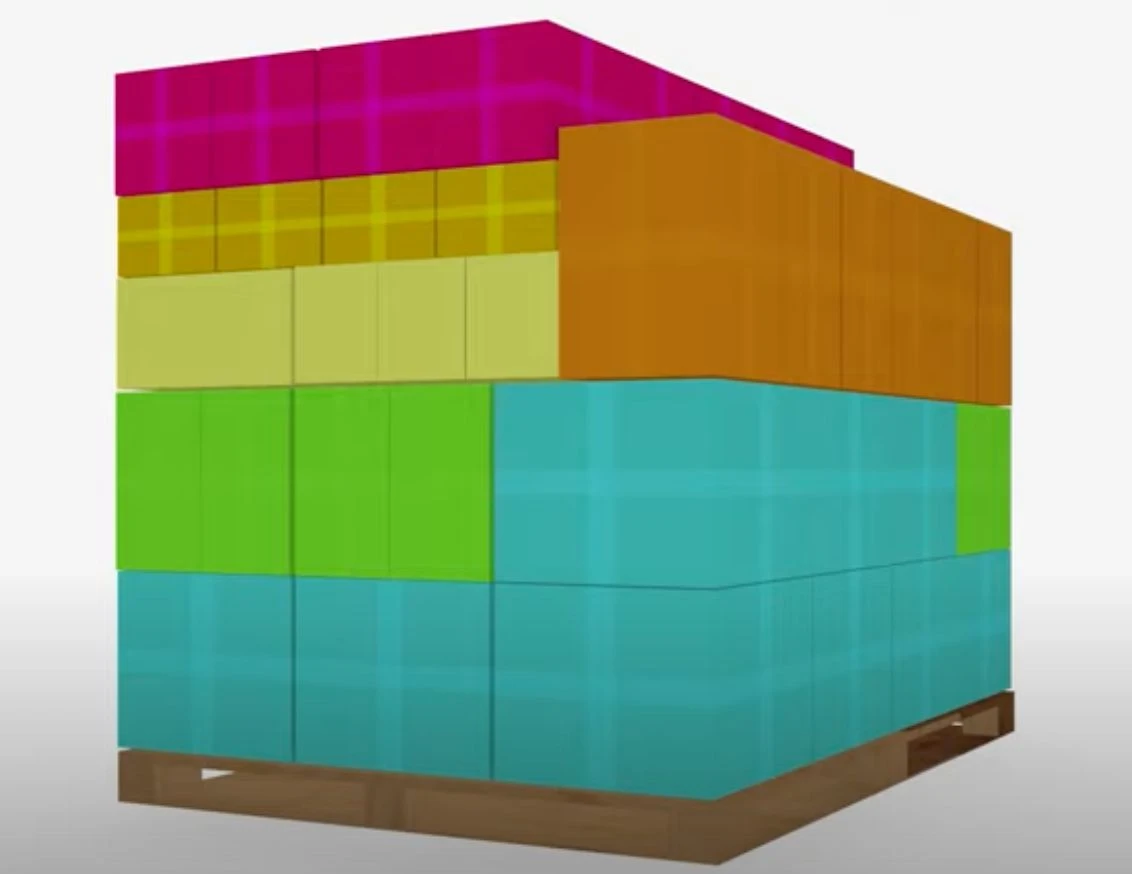
The Tall Pallet Station handles the outbound order profile that most systems walk away from — sub-3 qty per line, 25+ unique SKUs, stacked to full truck height. PES plans the build sequence. The arm executes it.
Order consolidation and packing; PES sequences work to the station and tracks completion before releasing to outbound.
Automated stretch-wrap and shipping label application at outbound — no manual wrapping, no missed labels.
PES-sequenced pallet staging by door, carrier, and departure window — pallets arrive at the dock in the right order.
Dock-door inbound scanning, quantity verification, and PES-directed putaway assignment.
Inbound SKU separation and putaway prep — a mixed pallet arrives, the associate pulls each SKU to its designated pallet or shelf, and PES directs where each one goes. Also handles case-to-each breakout for picking-ready storage. Keeps inbound clean without manual decisions.
Print-and-apply labeling station — a robot drives the pallet up to the printer and PES triggers automated shipping label application to one or all four sides. Eliminates manual labeling errors and keeps outbound moving without a human at the printer.
Arm-automated station that consolidates totes from scattered shelf locations into delivery-route shelves based on completed orders — loaded in LIFO order so the last stop on a route is picked first, enabling faster loading and sequenced delivery along the route.
Inbound returns scanned, sorted, and routed by PES to restock, quarantine, or disposition — no manual triage decisions.
Robot-delivered load to dock door or production line; PES times delivery to match outbound schedule or manufacturing takt.
Walk through any workflow — piece-pick to pallet-build, ambient to frozen, inbound to outbound — and see how PES orchestrates all of it from a single platform.