
3PLs can’t afford automation that outlasts their clients. Prime reconfigures in software — no racking, no fixed conveyors, no infrastructure that locks you in when a client walks.
Labor ratio at live 3PL deployment
Fixed racking required
Live 3PL deployments
One operator does what nine did before
Labor reduction at live 3PL deployment
Fixed racking required to operate
Live 3PL deployments running today
3PLs operate on a fundamentally different timeline than the companies that build automation for owner-operators. A client relationship is 3 years if you’re lucky. The automation solutions that have been pitched to you were designed for buildings companies own, for volumes they can project, for SKU profiles that don’t change when a client walks and a new one arrives with a completely different freight mix.
The result: most 3PLs stay manual. Margins erode. Headcount scales with volume. And every time a competitor offers better throughput, it’s hard to respond.
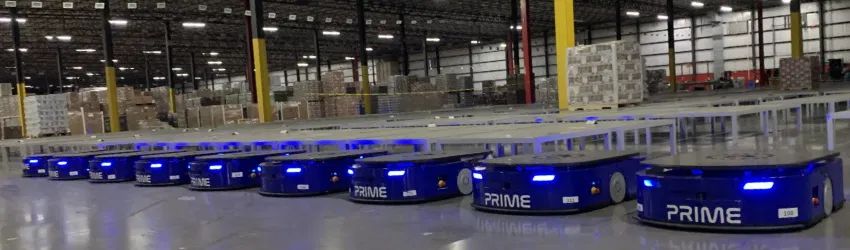
Prime was designed for exactly this problem. PrimeOS — our platform software — reconfigures in hours, not weeks. The robots navigate a pallet field on the floor. There is no racking to reinstall when a client leaves.
Every conveyor, every racking system, every hardwired automation is a liability when a client contract doesn’t renew.
Client A requires 85% shelf life on every case. Client B accepts 20%. Most systems can’t execute different rules simultaneously on the same floor.
Low quantity per line, high SKU mix, different every day. Automated systems are built for predictable volume profiles — not the hardest outbound work in distribution.
If an order calls for 45 cases of a SKU and the donor pallet has 55, most systems pick all 45 cases — one touch per case. PES does something different: it identifies the reverse pick.
Remove 10 cases from the donor pallet. Build the order on top of the 45 already there. The pallet that was 55 becomes the outbound order at 45. Ten touches instead of 45.
3PLs bill by the touch. This is pure margin — and it’s automatic. PES sees your full inventory in real time and makes this calculation across every eligible order simultaneously, without operator input.
Reverse picking requires real-time inventory visibility across the full pallet field and pick-level orchestration software that can optimize across all active orders simultaneously. It’s not a hardware problem. It’s a software architecture problem — and PES was built to solve it.
Actual touches
Billable touches
Prime robots navigate a pallet field on the floor. There is no racking investment required. When a client contract ends, you reconfigure PrimeOS — not your building.
The robots use SLAM navigation: they map the floor dynamically and adapt to layout changes without reprogramming. Add a lane, remove one, reroute flow — changes that would take weeks of construction time with fixed systems take hours in PrimeOS.
This is the single biggest structural advantage Prime has for 3PL operators. Every other automation system is a capital commitment that outlasts your client relationships. Prime isn’t.
Operational expense, not capital. RaaS financing keeps automation off the balance sheet and aligned with the contract-driven revenue model 3PLs actually operate on.
The operational complexity that makes 3PLs valuable to their clients is exactly what makes automation difficult. Clients have different SLAs, different product handling requirements, different fulfillment workflows. Routing the right product to the right order manually introduces delay, error, and overhead.
PES executes client-specific fulfillment logic in real time. One client requires 85% shelf life remaining on every case. Another accepts 20% and pays a lower price. PES routes the right product to the right order at pick time — automatically, without manual sorting, without separate inventory zones, without human intervention.
This is the kind of operational complexity your clients are paying you to manage. Prime handles it natively.
Route only product with 85%+ shelf life remaining. Reject shorter-dated inventory to secondary holding. Execute at pick time.
Accept product at 20%+ shelf life. Price point reflects shorter-dated inventory. PES picks from secondary pool first.
Arctic Series handles frozen and refrigerated SKUs. −20°F capable. Same WES, same operator interface.
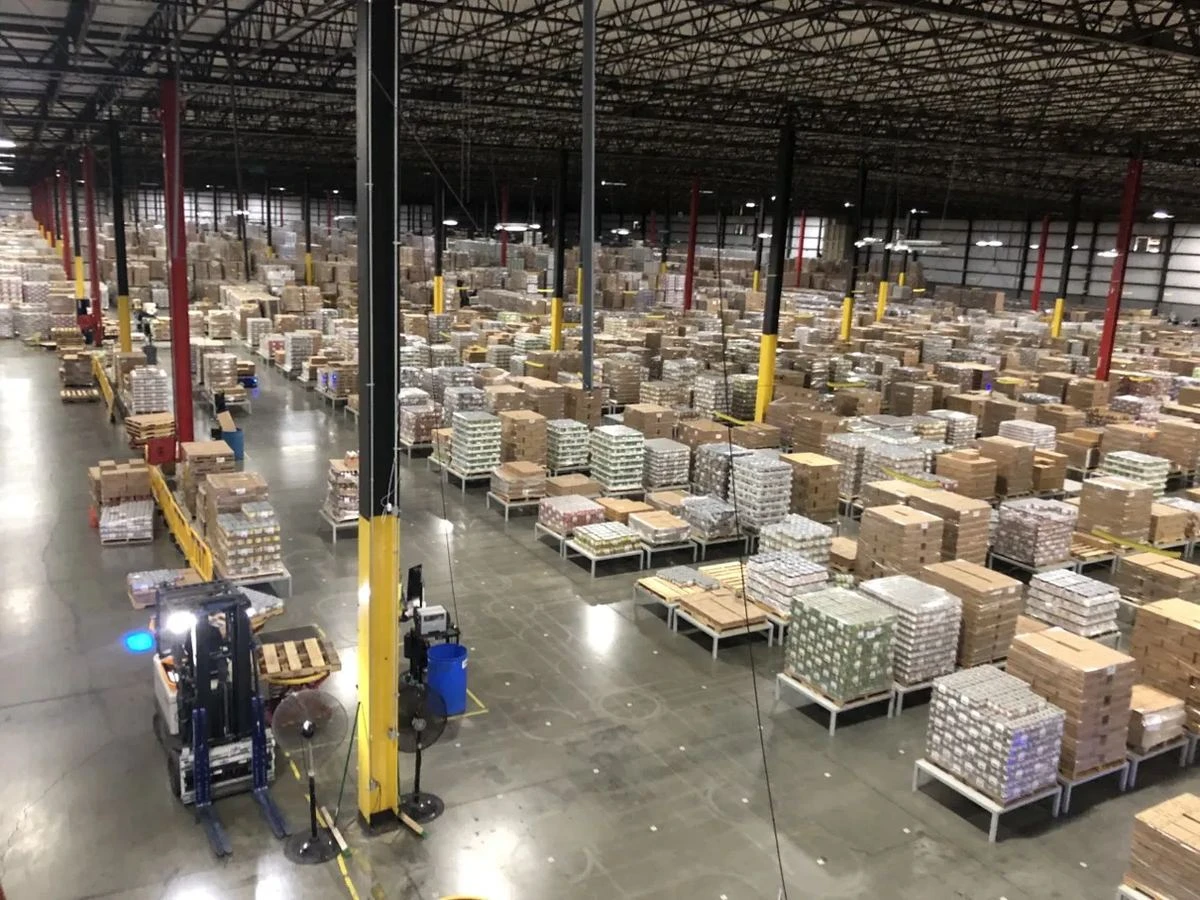
A shared warehouse is a 3PL’s highest-leverage asset. The problem is that every conventional automation system requires dedicated infrastructure per client — separate conveyor runs, separate rack zones, separate pick stations. The moment you carve a building into fixed lanes, you’ve lost the flexibility that makes a shared warehouse valuable.
Prime changes this because space allocation lives in PrimeOS, not in the floor plan. Client A’s inventory occupies one section of the pallet field. Client B’s occupies another. The boundary exists in software. When Client B grows and Client A shrinks, you adjust the allocation without touching the building.
The same pick station handles orders for both clients simultaneously. The same robot fleet serves the entire floor. PES routes each pallet movement to the right client’s order based on rules you define — SKU ownership, fulfillment SLAs, shelf life requirements — without physical separation.
Snack food · 85% shelf life rule · 40% of floor
Beverage · FIFO rotation · 60% of floor
Picks for Client A and Client B simultaneously. PES routes each case to the correct outbound order.
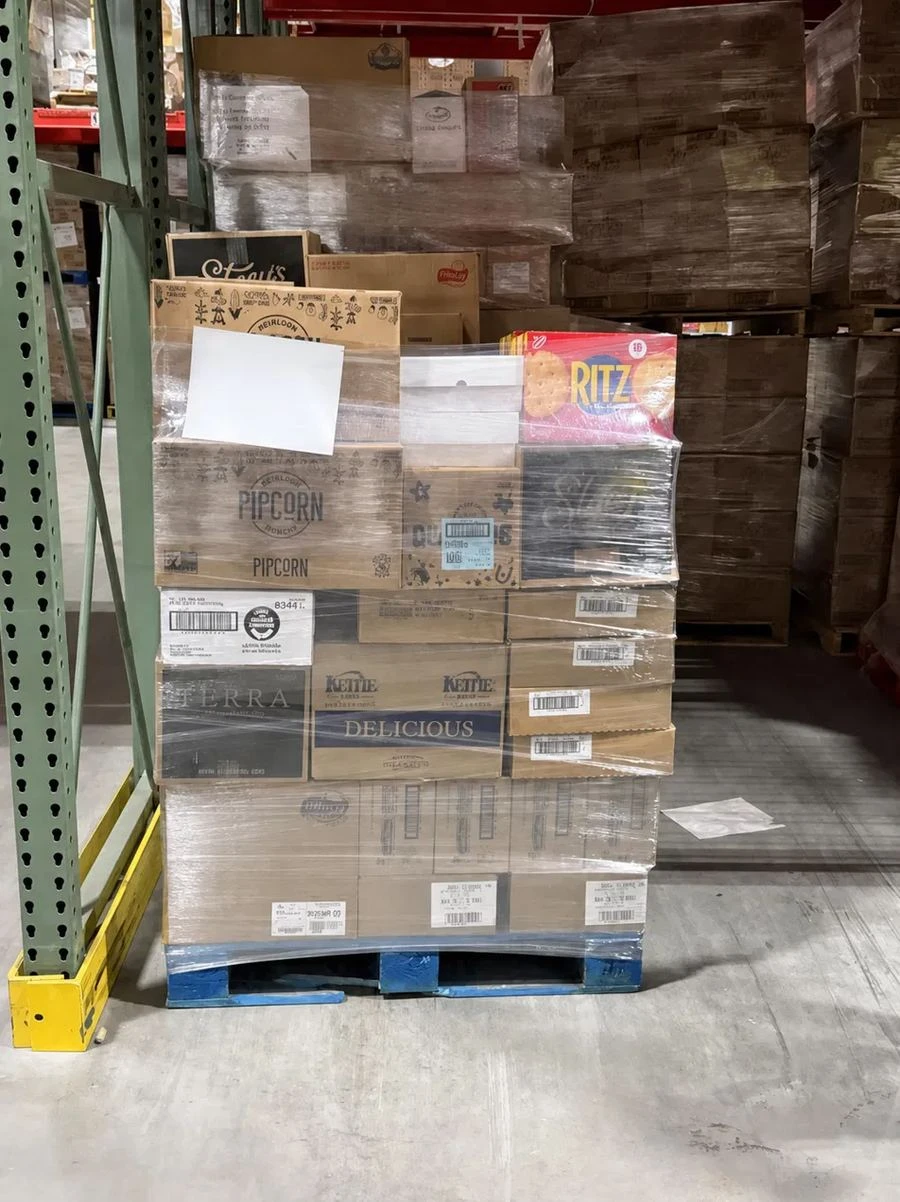
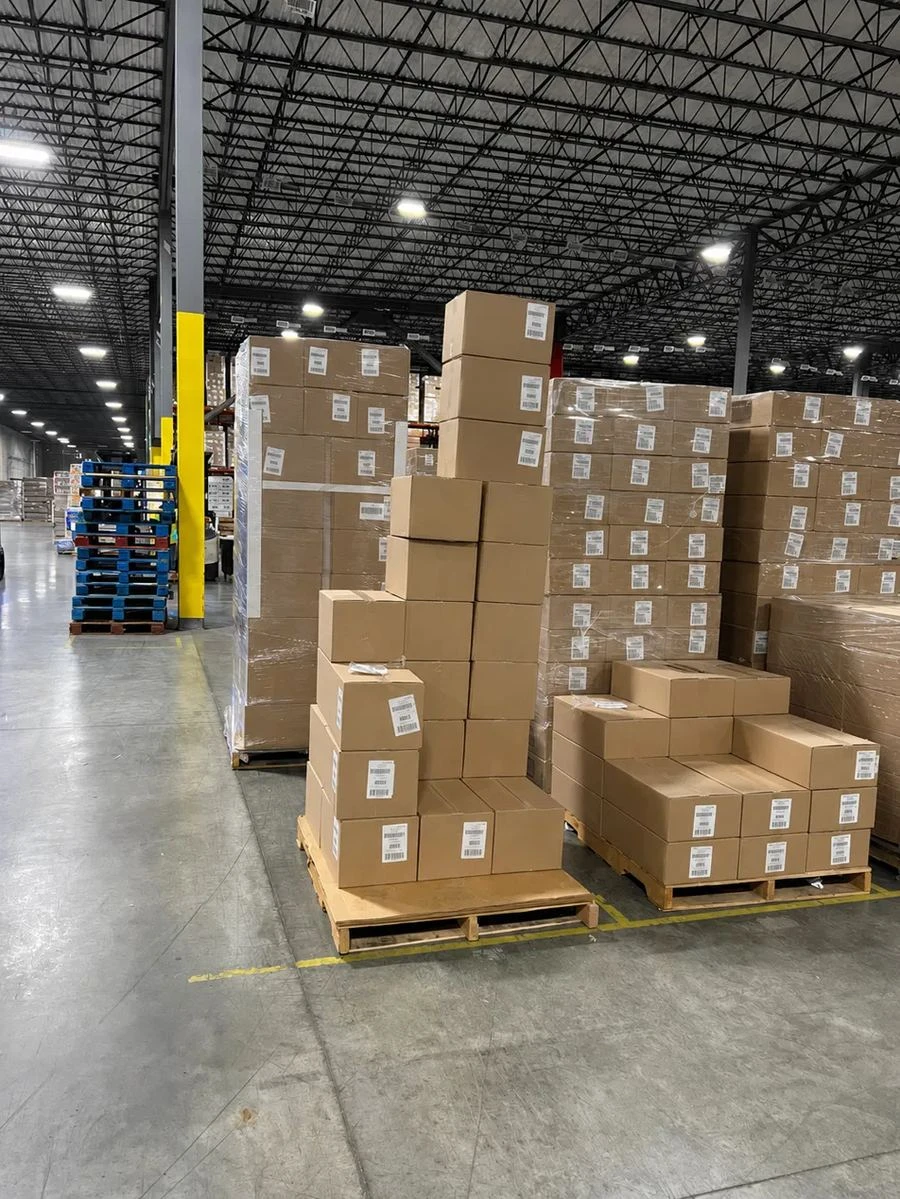
DSD orders are the outbound profile most automated systems avoid: low quantity per SKU, high SKU mix, different every day. The pallet that ships to a convenience store chain might have 30 SKUs and 2 cases of each. There is no fixed pattern to batch around.
Prime handles DSD natively because Bullseye Scheduling was designed for exactly this order profile. Rather than optimizing for high-volume single-SKU picks, Bullseye orchestrates multi-SKU outbound builds at the pick level — minimizing robot arm travel while maintaining accuracy across complex, dynamic order queues.
— CEO, Regional Snack Food Distributor
Bill for more touches than you make. PES identifies reverse pick opportunities automatically across every eligible order in the queue.
Different rules per customer, executed simultaneously in real time. Shelf life routing, handling requirements, SLA prioritization — all automatic.
Pallet field operation, no racking required. Reconfigure in software when a client contract ends — not with a construction crew.
Low quantity per line, high SKU mix, unpredictable daily order profiles. Bullseye Scheduling handles it natively.
−20°F rated robots for food and beverage clients with frozen or refrigerated SKUs. Same PrimeOS platform, same operator interface.
Operational expense, not capital. Automation aligned with a contract-driven revenue model rather than a 10-year depreciation schedule.
One shared floor serving multiple clients simultaneously. Client zones defined in software, not construction — resize or reassign space as contracts change, without touching the building.
Tell us about your operation and we’ll show you exactly how Prime handles your specific order profiles, client mix, and facility constraints.
No commitment required. A Prime team member will follow up within one business day.