
Intralogistics, lineside kitting, and just-in-time component delivery — Prime automates the material movement tasks that keep your production floor running.
lb MobilePallet payload for heavy factory moves
Lineside delivery timed to production demand
Infrastructure changes when the line reconfigures
WorkFlow Studio for all floor tasks — one system
Manufacturing floors move raw materials in from receiving, WIP between stations, finished goods out to shipping, and components to the line — continuously, all shift long. Most of that movement is handled by forklifts or fixed-path conveyors.
Forklifts are expensive, dangerous, and a constant source of congestion. Fixed-path automation is inflexible — every time the line changes, the infrastructure has to change with it. You pay for new installation, new programming, and weeks of downtime.
Prime’s approach is neither. Dynamic AMRs orchestrated by PES, reconfigured in software. When the line changes, you update the workflow — not the floor.
Every manufacturing floor runs on unwritten rules: “replenish line 3 when the bin drops below 10,” “move that pallet when line 7 finishes a batch,” “deliver the kit 15 minutes before the next build.” WorkFlow Studio turns those rules into automated workflows — no programmer required, no construction crew needed.
Manufacturing floors run on forklifts — moving raw materials from receiving to line, WIP between stations, finished goods to shipping. Forklifts are expensive, dangerous, and a constant source of congestion. They wait for each other. They wait for workers. They create blind spots.
MobilePallet AMRs handle up to 4,400 lb autonomously. They navigate dynamically around workers, equipment, and changing floor conditions using SLAM navigation — no fixed paths, no infrastructure. PES assigns every move based on real-time priority: raw material replenishment, WIP transfer, finished goods to shipping staging.
The forklift doesn’t wait for an AMR to clear the aisle because there are no fixed paths to conflict. Every move is routed dynamically, optimized continuously.
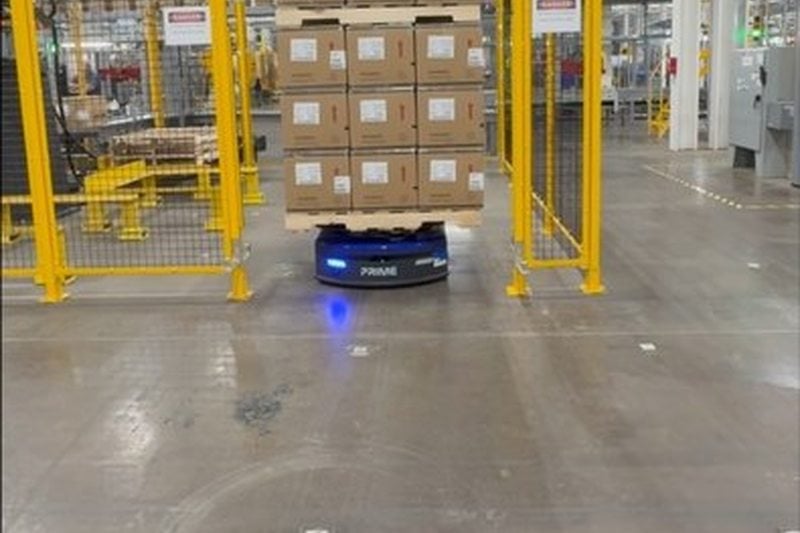
Most facilities stock components in a central warehouse and manually transport kits to the line. PES manages a dedicated on-floor component store and delivers the finished kit lineside — exactly when the line needs it, not before.
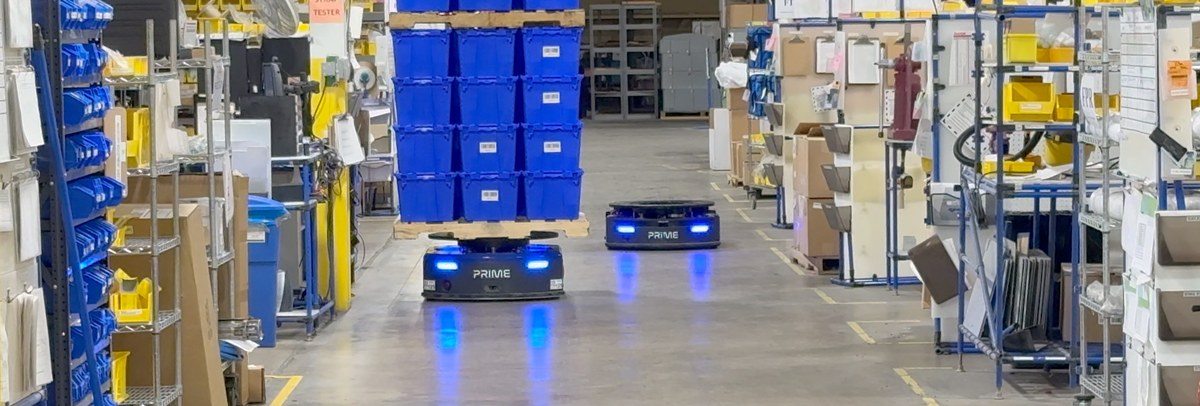
MES or ERP sends a build order to PES. Automatically. No manual hand-off.
PES decomposes the order into component picks against the on-floor inventory.
MobileShelf AMRs bring components to the kitting station in pick sequence.
PES directs pick-and-verify at the kitting station. Every component confirmed.
Finished kit delivered exactly when the line needs it. Not early. Not late.
PES times delivery to production demand. Kits arrive when the line is ready — not when someone remembers to check inventory. Line stoppages from missing components are eliminated.
JIT delivery means no component pile-up at the line. The floor stays clear. WIP inventory shrinks. Storage space that was consumed by buffer stock becomes floor space.
Manufacturing floors are full of rules. “Replenish line 3 when the bin drops below 10 units.” “Move finished pallet to staging when line 7 completes a batch.” “Deliver component tray to station 4 every 45 minutes.”
Today those rules live in someone’s head or a manual process. WorkFlow Studio turns them into automated workflows — define the trigger, define the response, and PES executes it across every robot and device on the floor.
Build order from MES, bin drops below threshold, production batch complete, time-based schedule
Retrieve components, replenish the line, move finished pallet to staging, deliver kit to station
Drag-and-drop configuration assigns available robots and devices to execute the workflow
PES runs all active workflows simultaneously, optimizing JIT timing and robot routing continuously
New product, new kit spec, new layout — reconfigure in WorkFlow Builder. Not the floor. Not the hardware.
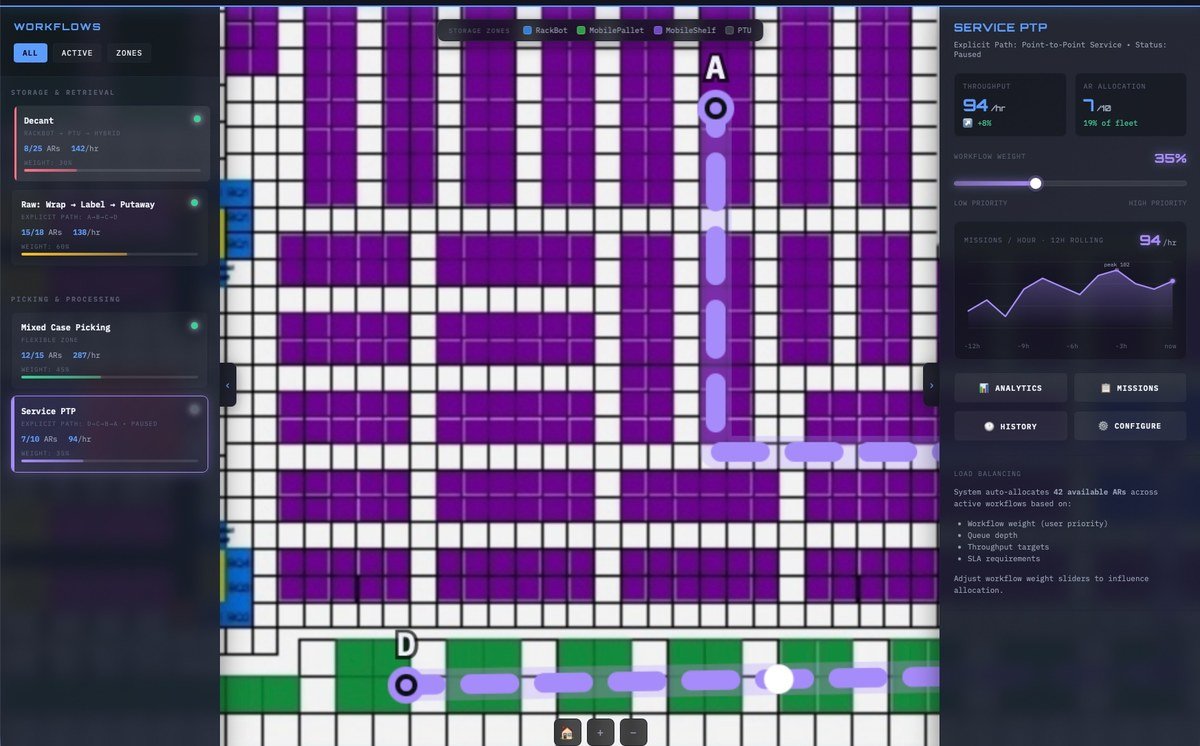
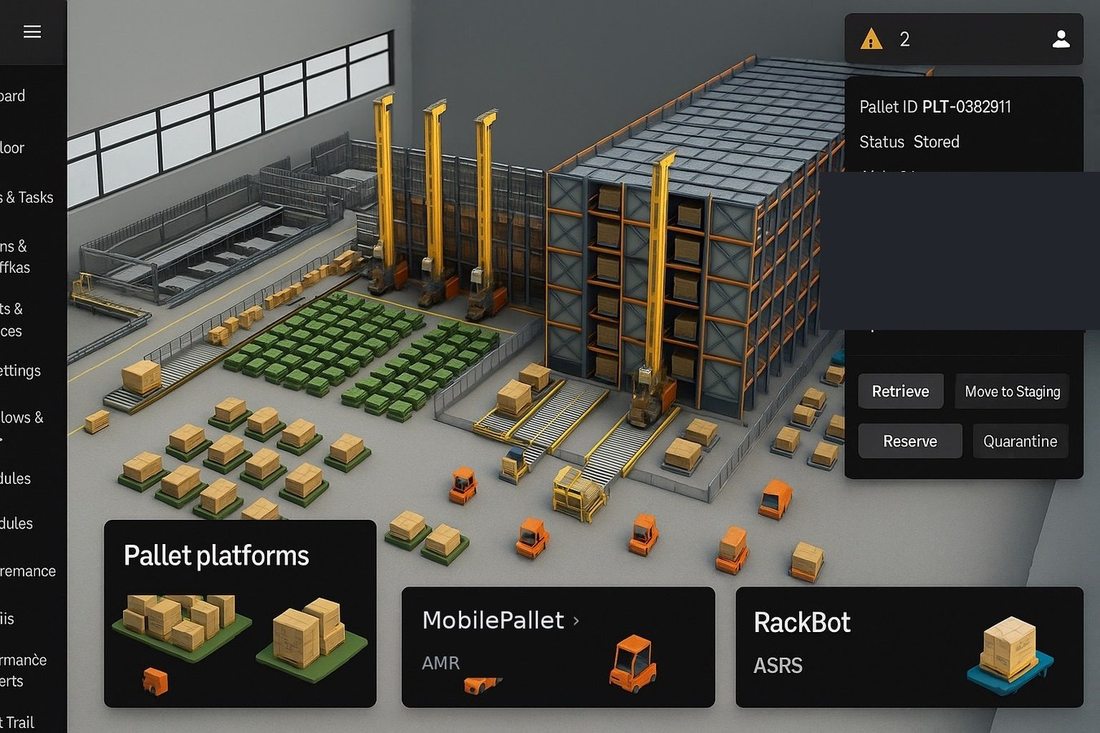
This workflow runs every time, automatically, optimized for current floor conditions.
Manufacturing lines change constantly — new products, new specs, seasonal runs, engineering changes. Every change is a problem for fixed automation. Conveyors get moved. Fixed-path robots get reprogrammed. Construction crews get called.
Prime reconfigures in WorkFlow Studio. Same robots, new workflow, running in hours not weeks. The investment doesn’t depreciate every time the product changes.
Weeks of downtime per line change
Hours to reconfigure a workflow
Construction crew required
Update in WorkFlow Builder
New hardware per layout change
Same robots, new routes
Specialist programmer for every change
Drag-and-drop workflow design
Investment depreciates at each product change
Platform value grows with every workflow
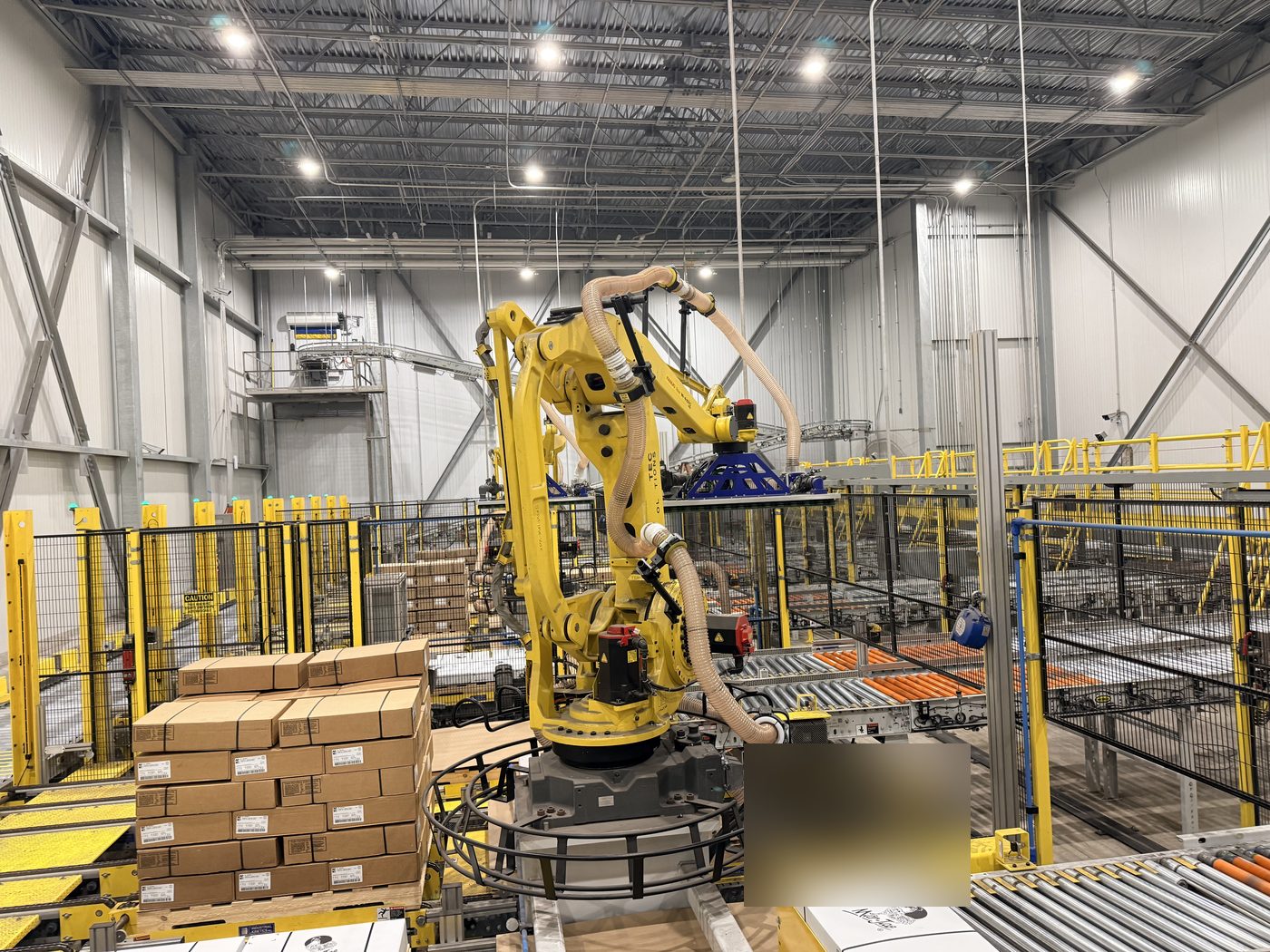
New kit specs become new workflows in WorkFlow Builder. Robots adapt to the new pick sequence without hardware changes.
Add or redistribute robot capacity across workflows without touching infrastructure. PES rebalances automatically.
Modified BOM or new station layout? Update the workflow. The robots navigate the new floor on the next run.
Factory floors have PLCs, MES systems, ERPs, conveyors, and equipment with APIs. Most automation projects leave those devices as isolated islands — each with its own software, its own interface, its own failure modes.
PES wraps any device that has a PLC or API and makes it a first-class object in WorkFlow Studio — the same way it wraps warehouse devices. A conveyor becomes a trigger. A PLC signal becomes a workflow event. The factory floor becomes one orchestrated system.
4,400 lb payload, dynamic SLAM navigation, PES-orchestrated for heavy factory intralogistics and cold storage.
On-floor component store, PES-directed JIT delivery. The line never waits for parts.
Any material movement rule becomes an automated workflow — no programmer, no construction crew.
All active workflows run simultaneously, robot resources balanced in real time for maximum throughput.
PLC / API wrappers turn existing factory equipment into first-class WorkFlow Studio objects.
PES connects to your production system via API. Build orders trigger workflows automatically.
Every manufacturing floor has its own material movement patterns. Tell us what you’re moving, how often, and where the bottlenecks are. We’ll show you how PES orchestrates it.
No pitch decks, no cold follow-ups. We’ll review your floor layout and show you which workflows PES can automate.